

***********
Update 09.28.2026
Trail Closure maps/updates: As forest thinning operations move through Section 17 on the Lowell Observatory property, see this section for trail closure maps. These maps will be updated as the logger moves through the property. For your safety, please be sure to stay out of the active logging operation’s site. It is very dangerous to go anywhere near logging equipment that is operating.
For the most up to date trail closures and information go to: gffp.org/lowell-observatory-thinning-project/
***********
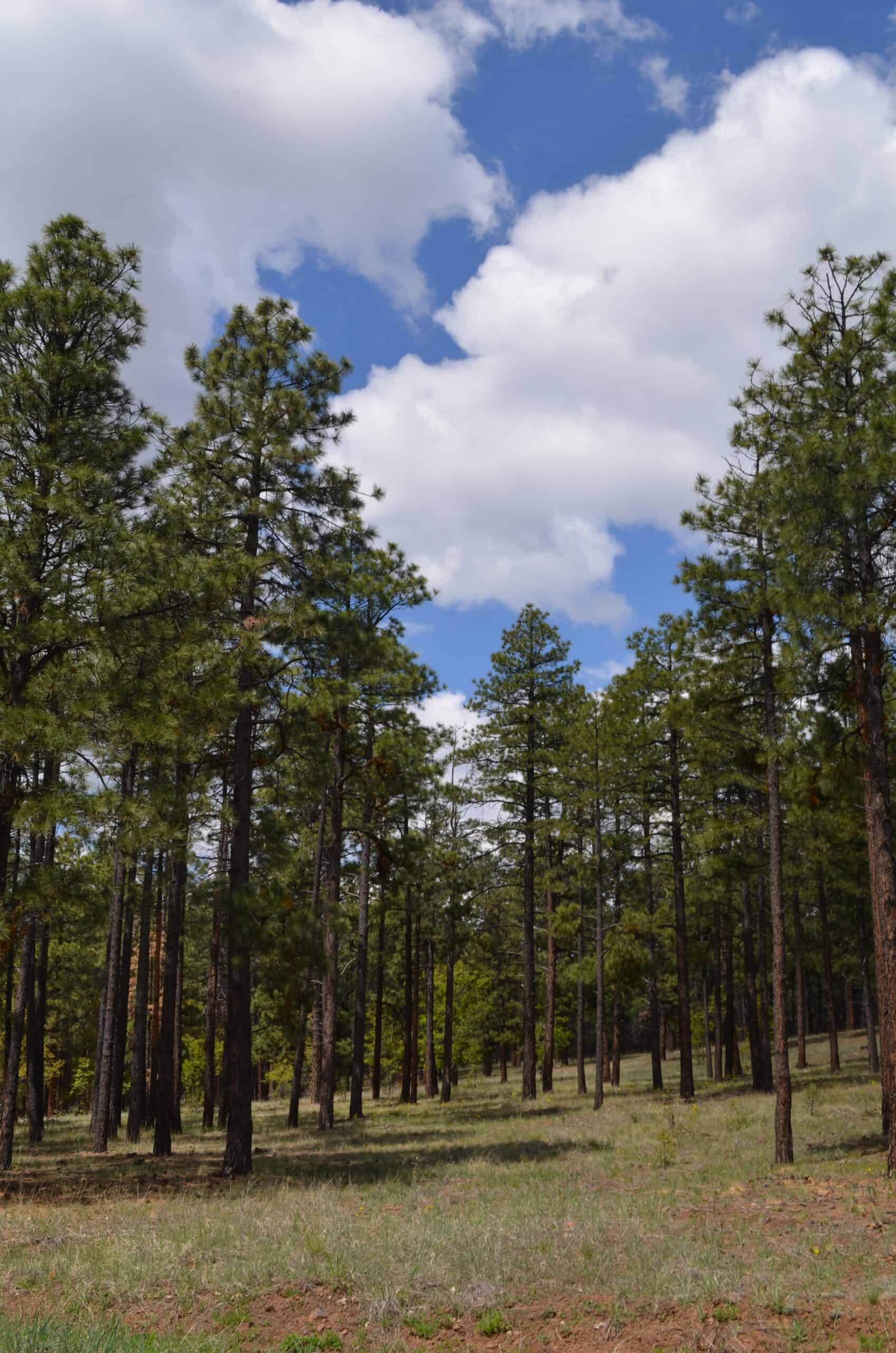
Flagstaff, Ariz. – This summer, a forest restoration effort will begin on Observatory Mesa to restore the forest and reduce wildfire risk for both the historic and valued Lowell Observatory and the greater Flagstaff community. Given Lowell Observatory lies on the northwest side of the City of Flagstaff and is only one mile from City Hall and downtown, forest restoration work will contribute to creating resilient forests in the face of increasing wildfire risk. The project plans to thin approximately 530 acres of small to medium ponderosa pine trees on a site that is a Registered National Historic Landmark and recognized as an “Arizona Treasure.”
“We are grateful for the opportunity to reduce the risk of wildfire to the Observatory and the heart of our community,” said Dr. Amanda Bosh, Lowell Observatory Executive Director. “Healthy forests are essential to northern Arizona, and this thinning project is one way we can support our surrounding community and do our part.”
Beloved by hikers, bikers, cross country skiers, and wildlife enthusiasts, Observatory Mesa is home to sections of the Flagstaff Urban Trail System (FUTS) and adjacent to the Observatory Mesa Natural Area that is owned by the City of Flagstaff. The Mesa is both a recreational haven and a natural buffer for the City. Improving forest health on the Mesa will help preserve its beauty, accessibility, and ecological health for years to come.
The restoration will focus on reducing hazardous fuels by thinning smaller ponderosa pine trees that create “ladder fuels,” which can carry fire into the crowns of larger, older trees, which will be retained. The treatments (thinning trees) will create a mosaic forest structure with groups of trees and distinct openings in between. The area will be mechanically thinned with logging equipment, and all of the logs and biomass (tree limbs and treetops) will be hauled offsite. Thinning operations are anticipated to begin on or around July 8th. Mechanical thinning and biomass removal are expected to take roughly six months, depending on conditions such as weather and fire restrictions.
“For more than a century, Lowell Observatory has been central to Flagstaff’s scientific identity and cultural history,” said Patrice Horstman, Chair of the Coconino County Board of Supervisors. “Investing in forest restoration to reduce wildfire risk to treasures like Lowell Observatory serves our community, our state, our county, and helps preserve cherished institutions for generations to come.”
The project is funded through a Congressionally Directed Spending appropriation through Senator Kelly and former Sinema’s offices and was awarded to Coconino County and the Greater Flagstaff Forests Partnership (GFFP). The County is overseeing the funding award in partnership with the GFFP. Additionally, the City of Flagstaff, Lowell Observatory, and Salt River Project are contributing funding towards the project.
The project will be managed and administered by the GFFP, a local nonprofit with decades of experience managing fuel reduction projects. Supervision of on-the-ground implementation will be led by Campbell Global, an established local firm with professional foresters and a strong track record throughout the region.
For more information, please contact Anne Mottek at the Greater Flagstaff Forests Partnership: admin@gffp.org.


