

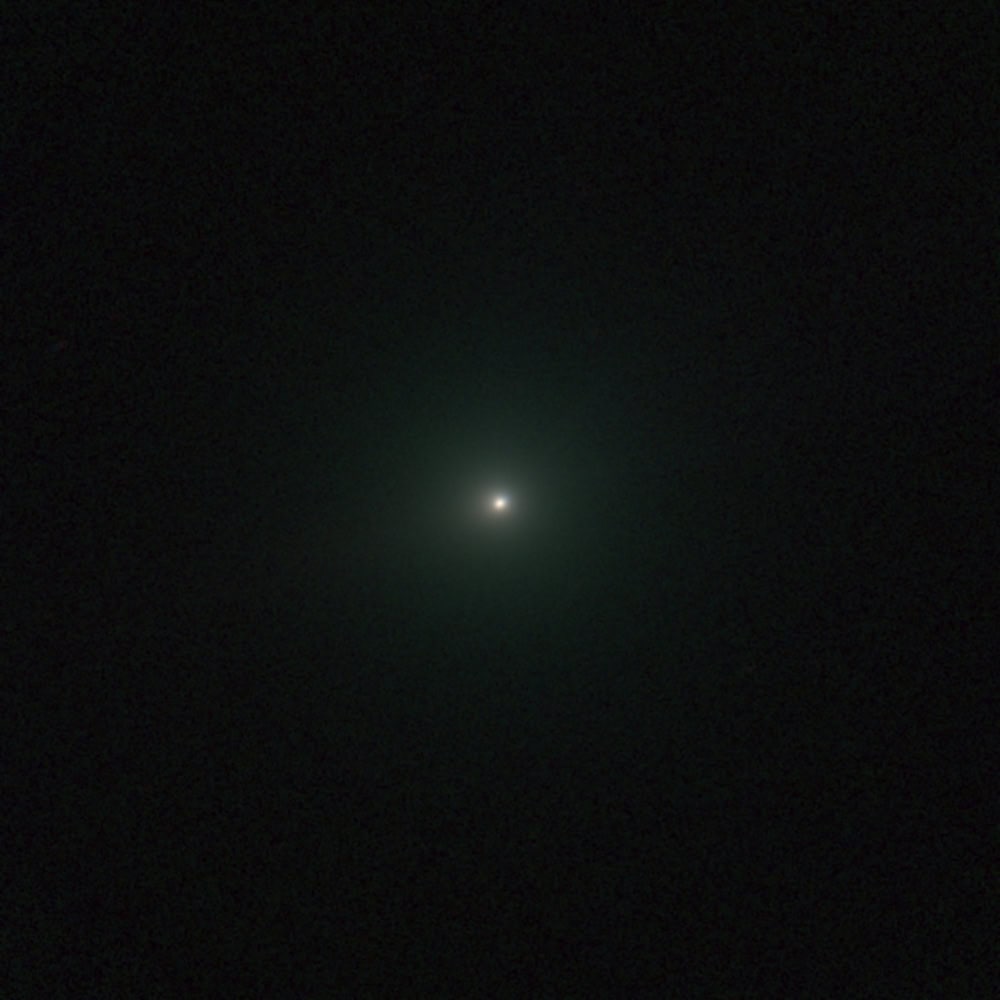
Comet 3I/ATLAS: A Rare Visitor with a Story to Tell
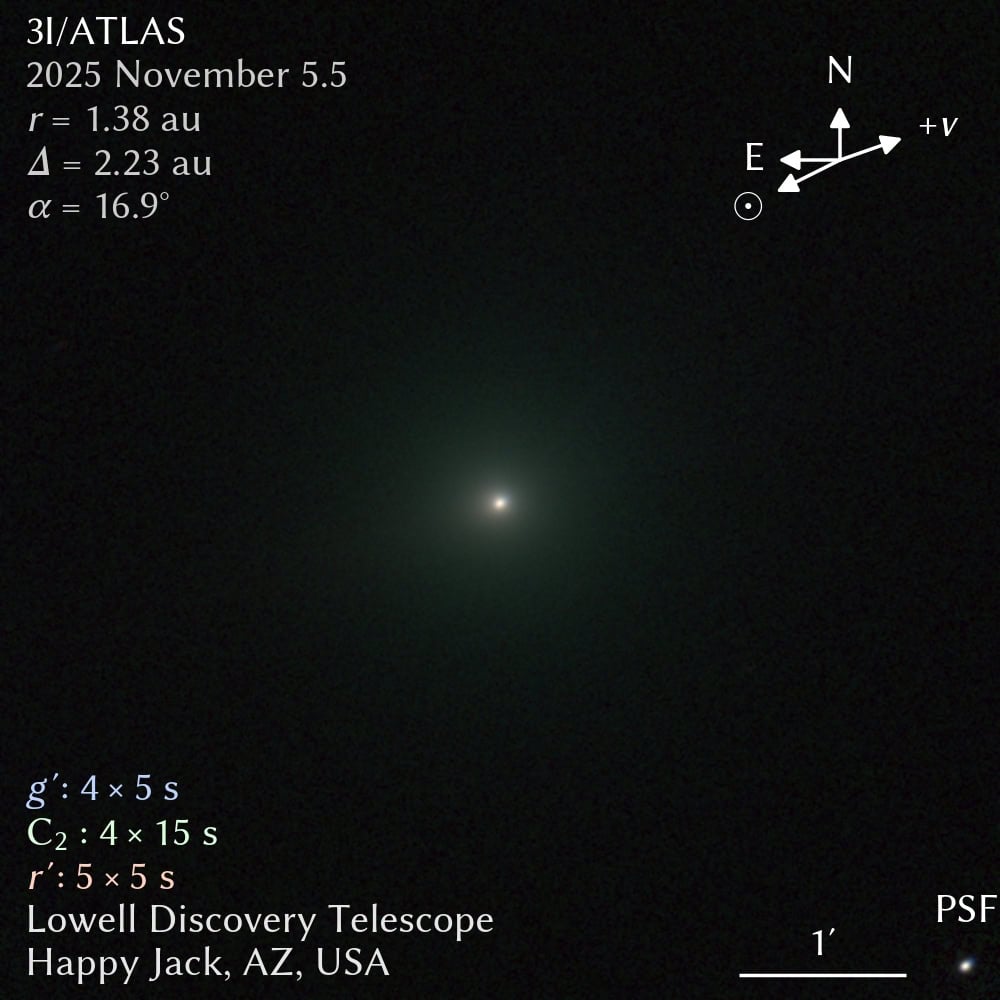
An otherworldly guest is making a brief appearance in our skies. Comet 3I/ATLAS, discovered by the ATLAS survey telescope in Chile earlier this year, is only the third known interstellar object ever observed passing through our solar system. Astronomers at Lowell Observatory, including Dr. Qicheng Zhang, are studying this rare visitor to uncover what it can teach us about worlds beyond our own.
A Comet Unlike Any Other
According to Dr. Zhang, what makes Comet 3I/ATLAS so intriguing is its unusual behavior compared to typical solar system comets we’ve seen. “Its cometary activity seems a bit delayed,” he explains. Most comets begin to release water vapor (H₂O) as they near the Sun, causing them to brighten rapidly. ATLAS came much closer to the Sun than usual before it began the outgassing process.
Its gas composition also sets it apart. On its way toward the Sun, ATLAS showed much higher levels of carbon dioxide (CO₂) than water vapor: a pattern more typical of comets still far from the Sun’s warmth. Even its dust seems different: the way light scatters off its particles suggests an unusual structure or composition, hinting that ATLAS’s icy grains may have formed under very different conditions than those in our solar neighborhood.
How Often Do We Find New Comets?
Though interstellar visitors like ATLAS are extremely rare, new comets are discovered all the time. “We’ve found about 30 major comets observable from the ground so far in 2025,” Dr. Zhang notes, which translates to nearly one a week. Many more are detected by specialized instruments like solar coronagraphs, which observe comets that pass close to the Sun. Most of these are fragments of ancient comets that broke apart long ago, continuing to orbit as smaller, individual bodies.
No Cause for Alarm
If the thought of an interstellar comet sounds ominous, there’s no need to worry. Comet 3I/ATLAS will not come anywhere near Earth. “At its closest point in December, it will still be farther from us than Mars is from the Sun,” says Dr. Zhang. After that, ATLAS will continue its journey out of the solar system, never to return.
For astronomers, that fleeting passage offers a rare opportunity: a brief window to study the chemistry, structure, and behavior of a traveler born far beyond our Sun’s reach. For the rest of us, this interstellar visitor serves as a reminder of just how much there is to explore outside of our solar system.