
Photo: Sanborn/Neugent/Lowell Discovery Telescope/NSF
See Saturn at Its Biggest and Brightest This Month
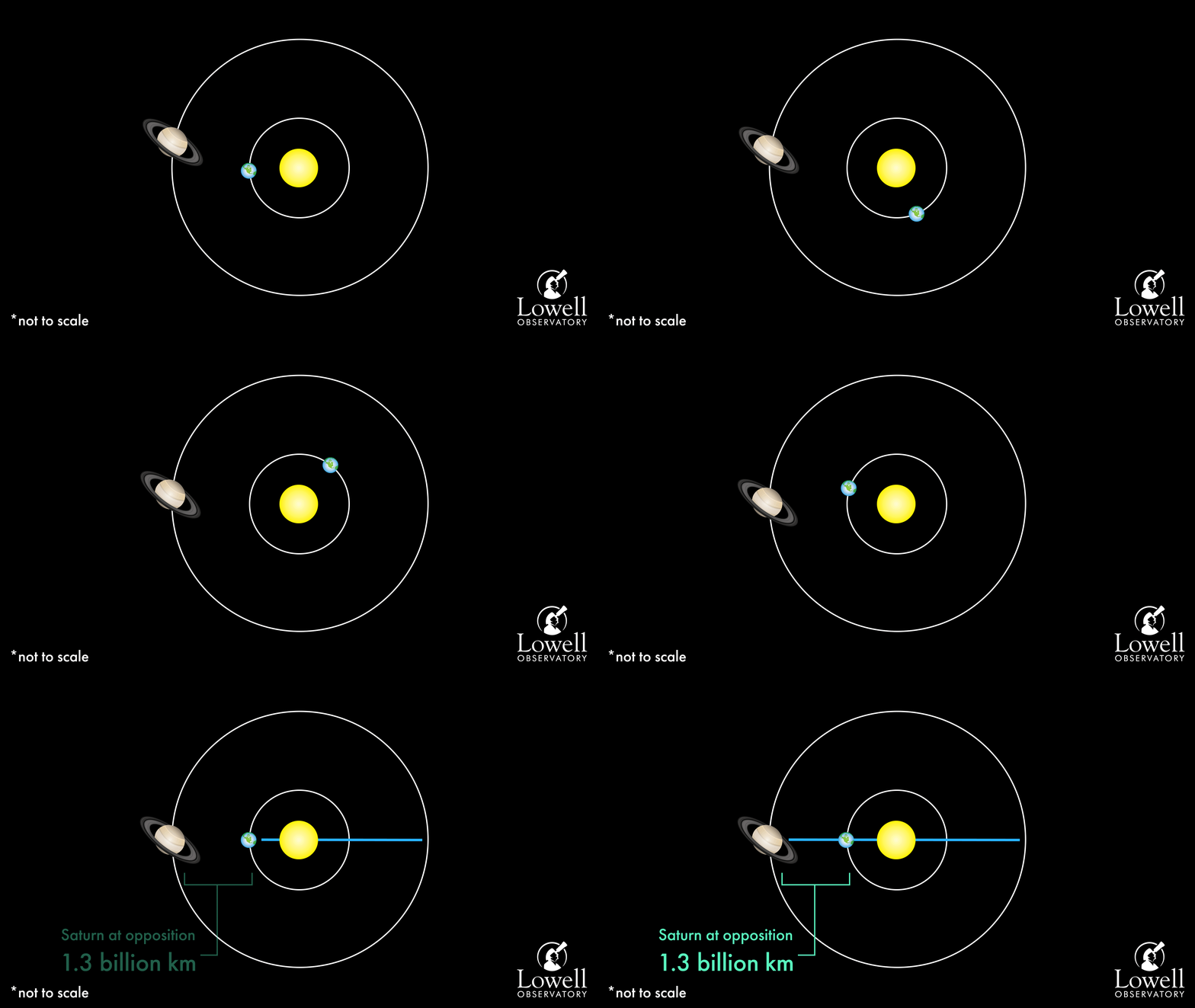
This September, stargazers get a serious treat: Saturn reaches opposition — its brightest and closest appearance of the year — on September 21, 2025. Earth will be positioned directly between Saturn and the Sun, allowing us to admire the Ringed Planet at its biggest and brightest.
What is the Saturn Opposition?
In astronomy terms, opposition refers to the middle point of the best time of year to view a particular planet. In opposition, the Earth lies between Saturn and the Sun, and so they appear opposite each other in our sky. On the day of opposition, Saturn rises when the Sun sets. It is also the time when the Earth is closest to Saturn in our orbit, making Saturn appear somewhat bigger and brighter in the sky than usual. This close proximity to Earth is called perigee.
How Can I View Saturn at its Biggest and Brightest?
You don’t have to wait until the opposition to admire Saturn — it’s visible in the night sky right now! After sunset, it rises in the eastern sky, appearing as a bright, yellowish “star” in the constellation Pisces. By the end of the month, it will move in front of Aquarius. You will need a telescope or binoculars to see the planet’s rings — we recommend visiting us here at Lowell Observatory, where we offer a suite of both historic and cutting-edge telescopes for public viewing!* Members of Lowell are invited to join us for the Saturn Soiree on September 20, where they can an enjoy an evening of exclusive Saturn viewing through the Dyer Telescope.
The exact moment of opposition is 08:00 UTC on September 21, 2025, 1:00 a.m. MST in Flagstaff (America/Phoenix does not observe daylight saving). At that instant, Saturn will be 8.54677 AU from Earth, or about 794 million miles (≈1.279 billion km). (Convert to your time zone.)
Saturn will remain visible in the evening sky for the rest of the year, and it will finally fade from view in the sunset’s glare by mid-February of 2026.
*Weather permitting.

Saturn at the moment of opposition at 6 UTC on 09/21/2025 | Image created with Stellarium.
Saturn’s opposition is perhaps one of the most visually striking celestial events of the year, especially for those with even a modest telescope or pair of binoculars at their disposal. If you find yourself outside on a clear night this month, look to the eastern sky for a bright, yellowish “star” to find the Ringed Planet looking its best. Happy stargazing!