Stellar Astrophysics
Massive Stars
Massive stars are extremely rare, but they serve as the “cosmic engines” that power the Universe, proving most of the ionizing radiation and mechanical energy of the interstellar medium.
They also forge most of the heavier elements: the carbon in your body and the oxygen that your breathe were all made in the interiors of massive stars. Our research group studies massive stars in the nearby galaxies of the Local Group, such as M31, M33 and the Large and Small Magellanic Clouds. We use a combination of imaging and spectroscopy to determine the physical properties and populations of these stars, and compare their results with current stellar evolutionary theory. If the observations and theory match, we celebrate! If they don’t, then it is time to figure out how and why they differ.
Massive star evolution
Dr. Philip Massey is currently working on combining our knowledge of the stellar populations of the Wolf-Rayet and red supergiant populations as a diagnostic of the influence of binarity on massive star evolution. Evolutionary models predict very different results for the relative populations of these stars in nearby galaxies depending upon whether the WRs were stripped by stellar winds or as the result of binary interactions. He is also using the Hubble Space Telescope to follow-up on a peculiar Wolf-Rayet binary star that he, Neugent, and other colleagues discovered several years ago in the Large Magellanic Cloud. They believe this star may be the first clear example of a “stripped binary,” a Wolf-Rayet star that has been formed through binary evolution.
Learn more about Dr. Phil MasseyLow-Mass Stars
Low-mass stars, also known as ‘M-dwarfs,’ are the most common type of star in the Universe – approximately 70% of all stars are in this mass range, from 0.6 solar masses (Msun) down to the hydrogen-burning limit of 0.08 Msun. They are also the longest-lived stars, with lifetimes of 20 billion to 100 billion years or more; their small sizes mean they burn through their nuclear fuel at a miserly rate, and they shine dimly but steadily. No M-dwarf that has come into existence in our Universe has ever died; they’re still too young. Given the degree to which these objects are ubiquitous throughout our Galaxy and others, M dwarfs are particularly interesting to astronomers as hosts of planets that could potentially bear life. The small size of these stars means its somewhat easier to find those planets about them, further increasing their research appeal. Our group at Lowell has been working to characterize these objects – their sizes, distances, temperatures – which opens up insights into the stars as well as any planets they might host. A particular specialty here has been characterizing the multiplicity rate of these stars: roughly half of the stars in the sky have a second star next to them (our own sun is a solo loner), and this could affect the planet hosting rate. For low-mass stars this rate is somewhat lower, but it is not well-measured nor understood.
The Sun and Solar-Like Stars
Dr. Jeff Hall and his Lowell collaborators Brian Skiff, Len Bright, and emeritus astronomer Dr. Wes Lockwood have been studying the cycles of the Sun and Sun-like stars for 25 years.
Our Sun and stars like it have a steadily waxing and waning cycle of activity arising from changes in their dynamic and complex magnetic fields. In the Sun, the sunspot cycle takes about 11 years on average to complete, and the dramatic difference between solar minimum and solar maximum is apparent in the image from NASA’s space-based Solar Dynamics Observatory (SDO). At solar maximum, many magnetic phenomena such as sunspots, prominences, and flares reach their peak levels. As of 50 years ago, it was unknown whether other stars had cycles like the Sun’s, but programs such as the Mount Wilson Observatory HK Project (1966-2003) and Lowell’s Solar Stellar Spectrograph (SSS) project (1992-2020) have shown that most of them do.


Areas of Research
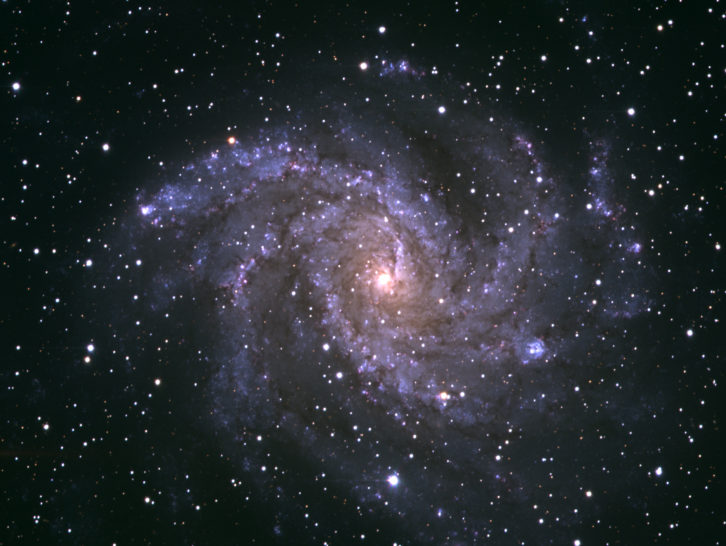
Exoplanetary Systems
Lowell astronomers search for distant worlds around other stars and characterize their nature.

Planetary Defense
Lowell Observatory plays a critical role in planetary defense by detecting, tracking, and characterizing potentially hazardous asteroids.
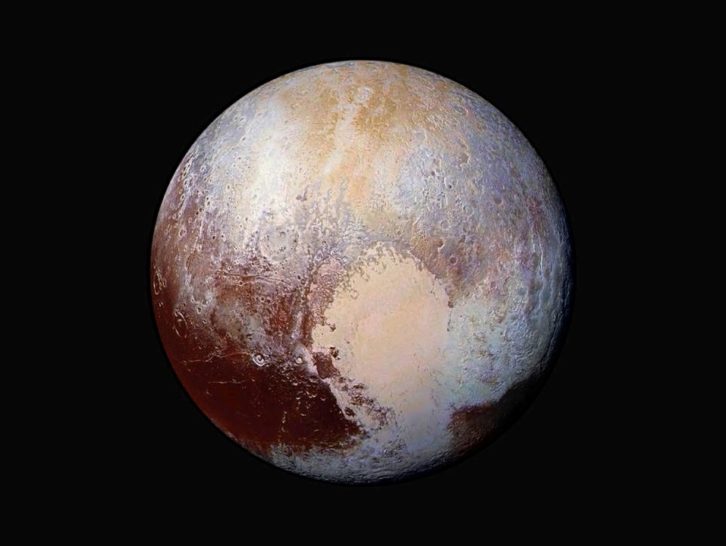
Solar System
Planetary scientists continue a long tradition of studying bodies in the solar system, including the Sun, planets, moons, comets, meteors, asteroids, and Kuiper belt objects.
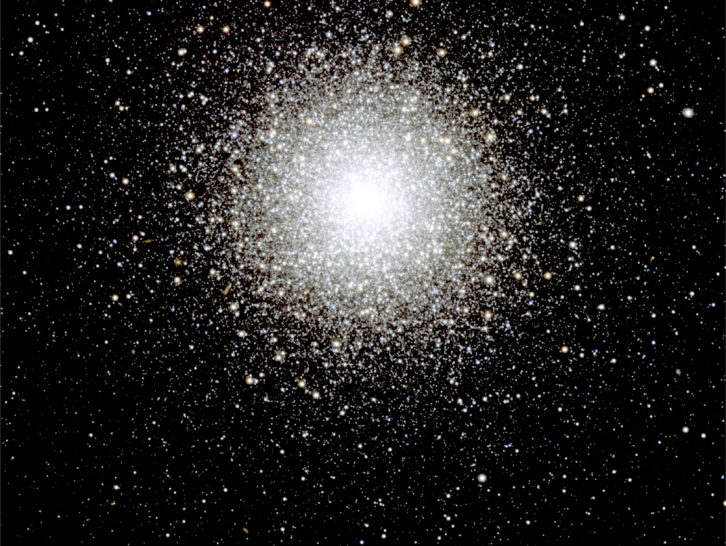
Stellar Astrophysics
Another longstanding tradition at Lowell is the study of stars, from supermassive Wolf-Rayet stars to low-mass M-dwarf varieties.
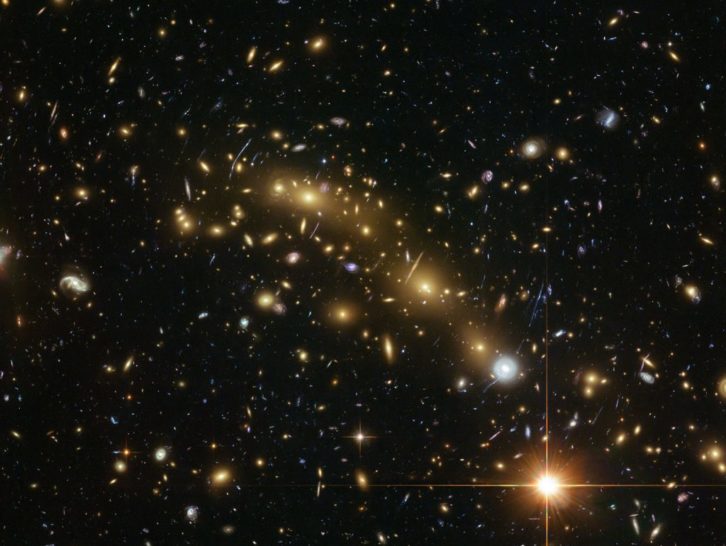
Galactic & Extragalactic Astronomy
V. M. Slipher’s observations of the redshifts of galaxies a century ago were the first evidence for the expansion of the universe. Research on structures of galaxies and of the universe continues at Lowell today.
Instrumentation Research & Development
Our instrumentation team carries out a variety of work in support of research instrumentation, outreach telescopes, and historic preservation projects.